
Classic Rebroadcast: November 29, 2014 with Nick Lowe and Renee Fleming
This week's classic rebroadcast: a November 2014 rewind from New York, NY with Nick Lowe and Renee Fleming.

Classic Rebroadcast: November 21, 2015 with Craver, Hicks, Watson, and Newberry; Heather Masse; and Dick Allen
This week's classic rebroadcast: a November 2015 show from Waterbury, CT with Craver, Hicks, Watson, and Newberry; Heather Masse; and poet Dick Allen.

Classic Rebroadcast: November 14, 2015 with Vince Giordano & the Nighthawks, the East 4th Street Quartet, and Christine DiGiallonardo
This week's classic rebroadcast: a return to November 2015 and a show from Cleveland, OH with Vince Giordano and the Nighthawks, the East 4th Street Quartet, and Christine DiGiallonardo.

Classic Rebroadcast: November 3, 2001 with Gillian Welch and Rhonda Vincent and the Rage
This week's classic rebroadcast: a show originally from November 2001 at the Fitzgerald Theater with Gillian Welch, and Rhonda Vincent and the Rage.
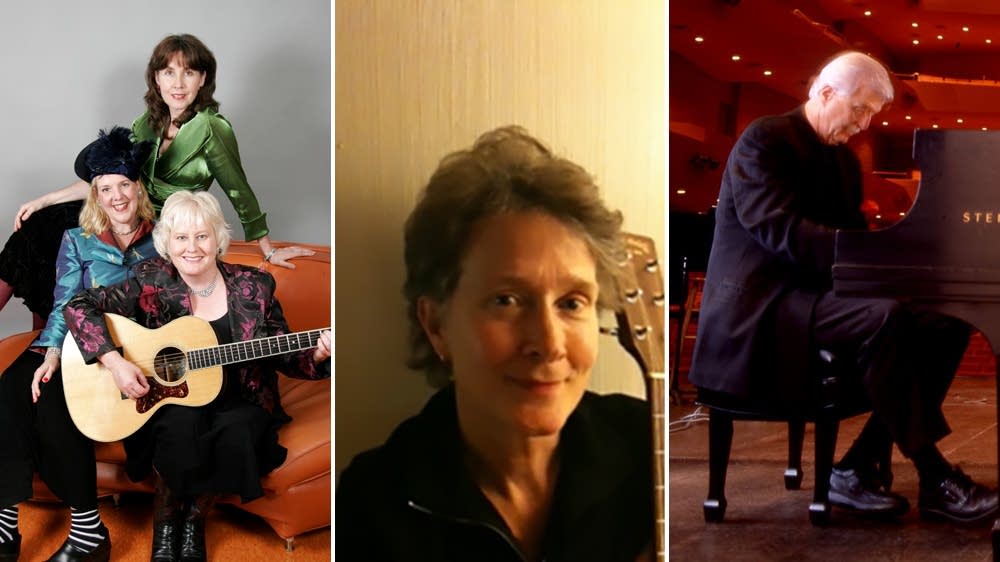
October 31, 1998 rebroadcast with The Chenille Sisters, Kate MacKenzie, and Butch Thompson and the Hiawatha Marching Band
This week's classic rebroadcast: an October 1998 rewind from St. Paul, MN with The Chenille Sisters, Kate MacKenzie, and Butch Thompson and the Hiawatha Marching Band.

October 24, 2015 rebroadcast with Ellie Dehn, Kate Beahen, the Anoka High School Pep Band, and the Seventh Avenue Singers
This week's classic rebroadcast: an October 2015 show from Anoka, MN with Ellie Dehn, Kate Beahen, the Anoka High School Pep Band and the Seventh Avenue Singers.

October 3, 2015 rebroadcast with The California Honeydrops, The Cactus Blossoms, and Christine DiGiallonardo
This week's classic rebroadcast: we look back to October 2015 and a show from St. Paul, MN with The California Honeydrops, the Cactus Blossoms, and Christine DiGiallonardo.

September 19, 2015 rebroadcast with JD McPherson
This week's classic rebroadcast: our September 2015 season opener from St. Paul with music from JD McPherson.

October 2, 2010 rebroadcast with Dr. John and the Lower 911, Jearlyn Steele, and Andra Suchy
This week: a look back to October 2010 and a show in St. Paul, MN with Dr. John and the Lower 911, Jearlyn Steele, and Andra Suchy.

September 29, 2007 rebroadcast with Nick Lowe, Martin Sheen, BR549, and Maria Jette
This week's classic rebroadcast: a September 2007 show from St. Paul, MN with Nick Lowe, Martin Sheen, BR549, and Maria Jette.